
ROI from ESL Implementation – How Electronic Shelf Labels Optimise Retail Operations
 Blog
Blog
Share:
Key Insights from the Article:
- ESL (Electronic Shelf Labels) is more than just a digital price tag; it is a tool for real-time price management and operational excellence.
- The Return on Investment (ROI) from ESL comes from massive labor savings, elimination of pricing errors, and enhanced store aesthetics.
- Operational optimisation occurs through automated updates, allowing staff to focus on customer service instead of manual labelling.
- Sustainability is a core benefit, as ESL significantly reduces paper waste and supports ESG goals in retail.
In the modern retail landscape, price dynamics and operational efficiency are the cornerstones of competitiveness. Many retailers still struggle with the manual replacement of paper labels—a process that is time-consuming, error-prone, and costly. Implementing Electronic Shelf Labels (ESL) transforms this challenge into a measurable business advantage.
Why Move Beyond Paper Labels?
Traditional paper labelling is increasingly becoming a bottleneck for scaling retail businesses. The primary pain points include:
- Labor Intensity: Employees spend hundreds of hours monthly printing, cutting, and placing labels.
- Pricing Discrepancies: Mismatches between shelf prices and POS systems lead to customer frustration and legal risks.
- Reaction Time: Adjusting prices for promotions or “Happy Hours” is nearly impossible to execute instantly across a whole chain.
- Waste: Constant re-printing generates significant paper and toner waste, contradicting modern sustainability standards.
How ESL Builds Operational Advantage
Electronic Shelf Labels integrate directly with the store’s central ERP or POS system. When a price changes in the system, it updates on the shelf in seconds.
The most significant operational benefits include:
- Instant Price Synchronisation: 100% consistency between the shelf and the checkout.
- Dynamic Pricing: The ability to implement time-sensitive promotions or respond to competitors’ prices in real-time.
- Enhanced Staff Productivity: Automating price updates frees up thousands of hours for tasks that add more value, such as restocking or customer assistance.
- Order Picking Support: Modern ESL tags can flash (using LED indicators) to help e-commerce pickers find products faster, significantly boosting Click & Collect efficiency.
Measuring the ROI: Is It Worth It?
The investment in ESL is often scrutinised due to upfront hardware costs. However, the Return on Investment is rapid when looking at the total cost of ownership (TCO) and operational savings:
- Direct Labor Savings: Eliminating manual labeling can save an average-sized supermarket up to several dozen hours per week.
- Reduced Shrinkage and Fines: Eliminating “wrong price” complaints and potential regulatory fines for price discrepancies.
- Materials Cost: Complete removal of paper, ink, and printer maintenance expenses.
- Sales Uplift: Improved price agility allows for better inventory turnover through strategic markdown management.
ESL as a Pillar of ESG Strategy
Modern retail is increasingly judged by its environmental footprint. Transitioning to ESL is a clear signal of a brand’s commitment to Sustainability:
- Zero Paper Waste: Thousands of labels saved every year per store.
- Longevity: Modern ESL batteries last up to 10 years, ensuring a long-term, low-maintenance lifecycle.
- Better Stock Management: Precision in pricing helps reduce food waste by enabling timely markdowns on expiring products.
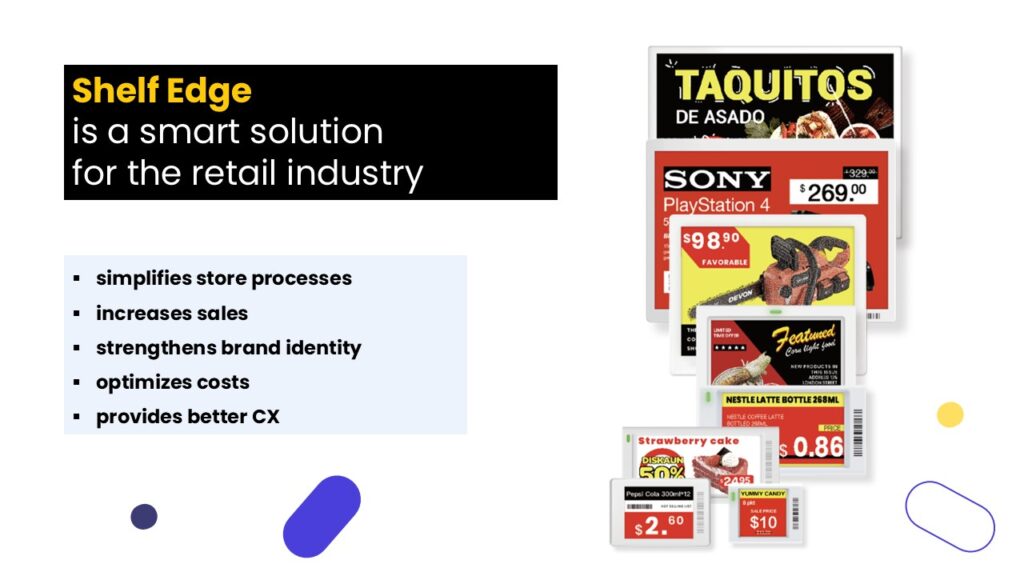
Why Choose Exorigo-Upos for ESL Deployment?
As a leader in RetailTech, Exorigo-Upos provides end-to-end ESL solutions tailored to specific business needs. From hardware selection to deep integration with existing IT ecosystems, we ensure that the technology works invisibly in the background to drive your store’s performance.