
 Blog
Blog
Share:
According to the Cushman & Wakefield report “Retail MarketBeat Poland Q2 2026”, the second quarter of 2026 brought a clear recovery in Polish retail. The growth of new retail space, the dominance of retail parks, and higher footfall in physical stores are driving the entire market. However, the expansion of dispersed store networks and changing consumer habits require retailers to have modern technological infrastructure and seamless integration of omnichannel sales.
Key insights:
- Clear sales recovery: In May 2026, retail sales increased by 3.0% year-on-year, driven primarily by the pharmaceuticals and cosmetics, consumer electronics and home appliances, and apparel segments.
- Dynamic growth of new space: In the second quarter of 2026, approximately 150,000 sqm of new retail space was completed (compared to 90,000 sqm in the corresponding period of 2025).
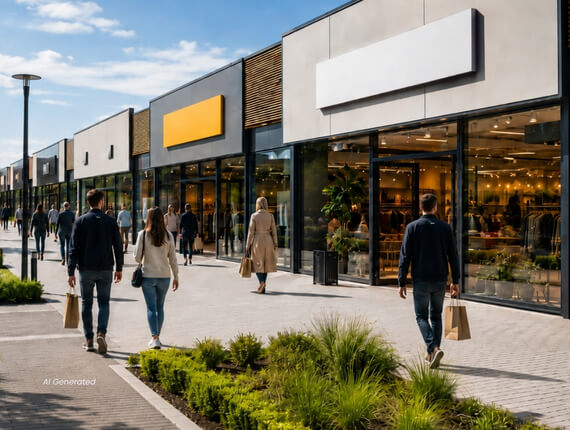
- Dominance of retail parks: All new investments (12) completed in the second quarter of 2026 were retail parks. They also account for nearly 90% of the retail space currently under construction.
- Higher customer footfall in stores: Following a weaker April, footfall in shopping centers increased by 5.1% y/y in June 2026, allowing the entire first half of the year to close on a slight positive note (+0.6% y/y).
- Massive investments: Transactions in the retail real estate market reached nearly EUR 713 million – a more than fivefold increase compared to the second quarter of last year.
How has Polish retail changed in Q2 2026?
In the second quarter of 2026, the Polish retail market demonstrated stable growth, confirming its solid fundamentals.
GDP growth at 3.5% y/y in the first quarter and a drop in inflation to 2.5% y/y in June created exceptionally favorable conditions for consumer spending. Additionally, average earnings in the enterprise sector rose to PLN 9,173 gross, which directly translated into greater purchasing power for Polish consumers.
Retail sales quickly recovered from the April slowdown, recording a 3.0% y/y increase in May. Results varied by industry, with the highest growth dynamics recorded in the following categories:
- Pharmaceuticals, cosmetics, and orthopedic equipment: 9.3% y/y increase.
- Furniture, consumer electronics, and home appliances: 4.5% y/y increase.
- Textiles, apparel, and footwear: 3.8% y/y increase.
By contrast, the food, beverages, and tobacco category recorded a 2.8% y/y decrease.
Why have retail parks dominated new investments?
The dominance of this format is a direct response to the needs of customers who value fast and convenient shopping close to home.
New retail space completed in the second quarter of 2026 consisted entirely of retail parks. Furthermore, they account for as much as 90% of the approximately 650,000 sqm of retail space currently under construction.
A dispersed network of locations requires retailers to maintain reliable IT infrastructure, modern POS terminals, and real-time inventory data updates. To ensure customer comfort and efficient service, retailers are increasingly investing in innovative retail sales systems.
It is also worth mentioning the continuous influx of new foreign companies. In the past quarter, several brands opened their first brick-and-mortar stores in Poland, including the American brand The Leather Trading Co., the Korean cosmetics chain Ksisters, the Danish home furnishings brand Søstrene Grene, and the Italian fashion house Trussardi.
– The rapid development of retail parks in smaller towns means one thing for retailers: you have to act faster and more efficiently than before. Our experience shows that the key to maximizing profits is implementing solutions that seamlessly integrate physical retail with e-commerce. Companies that can update prices and inventory levels in real time, as well as ensure a consistent shopping experience, better address customer needs and respond more quickly to growing expectations – says Dariusz Stolarczyk, Strategic Advisor at Exorigo-Upos.
How does technology help respond to market trends?
Simply opening a store is no longer enough. Although June brought a solid 5.1% increase in footfall across retail facilities, consumer behavior has changed.
Polish consumers have grown to like fast and hassle-free shopping – they expect self-service checkouts, instant payments, simple returns, and personalized discounts via mobile apps on their phones. Technology has thus ceased to be merely a business supplement and has become the primary tool for building strong customer relationships.
– At Exorigo-Upos, we provide retail chains with a comprehensive ecosystem: from modern cash registers and proprietary sales software to ongoing maintenance and support for the entire IT infrastructure – comments Dariusz Stolarczyk – By removing the burden of routine, repetitive tasks from store employees, we give them time for what matters most – direct and professional customer service.
If you are wondering how best to combine brick-and-mortar sales with online channels, check out our OmniCommerce for RETAIL system.
Are Polish consumer sentiments improving?
Data for the second quarter of 2026 indicates a gradual improvement in sentiment among Polish consumers. In June 2026, both the Current Consumer Confidence Indicator (CCCI) and the Leading Consumer Confidence Indicator (LCCI) recorded increases compared to May, standing at -9.9 and -7.7 respectively.
This upward trend is primarily the result of better sentiment regarding the domestic economy and the financial situation of households. Although both indicators remain in negative territory (confirming Poles’ cautious approach to major purchases), June brought an improvement in most surveyed areas:
- Assessment of Poland’s future economic situation: -17.4.
- Current financial situation of households: +31.3.
- Future financial situation of households: -1.9.
- Propensity to make major purchases: -3.3.
It is worth noting that Poland performs better in this regard compared to the rest of Europe. According to Eurostat data for June 2026, the consumer confidence indicator in Poland was -13.3, while the average for the entire European Union stood at -15.7, and for the eurozone at -16.4.
Summary
The Cushman & Wakefield report “Retail MarketBeat Poland Q2 2026” confirms that Polish retail has entered a phase of mature development, where investments in technology, operational flexibility, and customer convenience are crucial. The dominance of retail parks and increasing footfall in physical stores create great expansion opportunities, but also require the efficient integration of all sales channels.