
Fiscalization in Omnichannel – How SmartHub Builds Operational Advantage and Supports Sustainability

 Blog
Blog
Share:
Key Insights from the Article:
- Fiscalization in e-commerce is often a demanding process prone to downtime, but with SmartHub, it can be transformed into a source of operational advantage.
- Automating fiscal processes eliminates manual errors and lowers IT support costs, allowing for business scalability without a proportional increase in expenses.
- Implementing e-receipts provides a tangible benefit for the environment, saving hundreds of tons of paper annually and reducing CO2 emissions.
- The integrated SmartHub system by Exorigo-Upos bridges online and offline sales, ensuring data consistency and a modern shopping experience.
For companies expanding their omnichannel presence, fiscalization is often treated as a necessary burden—a task to be completed correctly, in compliance with regulations, and without disrupting business continuity. The problem arises when this obligation begins to slow operations, generate additional costs, and increase risk.
However, a well-designed fiscalization model can do much more than just ensure formal compliance. It can streamline sales processes, reduce manual tasks, improve customer convenience, and support ecological goals. That is why more organizations are viewing fiscalization through the lens of operational efficiency, customer experience, and ESG (Environmental, Social, and Governance).
Why is Fiscalization in E-commerce a Challenge?
Selling across multiple channels today requires consistency. Customers expect to buy conveniently and quickly, regardless of whether they use an online store, an app, a marketplace, or a physical point of sale. Meanwhile, fiscalization often runs in the background as a separate, inflexible process.
The most common problems occur when:
- Sales operate 24/7, and any failure or delay directly impacts order fulfillment.
- The process requires specialized knowledge and constant monitoring for compliance.
- Document generation becomes a critical bottleneck in the order-picking process.
- Paper receipts increase dependency between the warehouse, packaging, and printing.
- Growing sales volume leads to rising costs for IT support, maintenance, and hardware servicing.
In practice, fiscalization can become a bottleneck. When a receipt must be included in a package, the entire fulfillment process becomes more vulnerable to delays. As sales scale, it becomes evident that the traditional document handling model cannot keep pace with modern retail needs.
How to Turn a Fiscal Obligation into an Operational Advantage
Fiscalization in omnichannel does not have to be just a cost and a risk. If properly designed, it can support company growth and simplify the daily work of various teams.
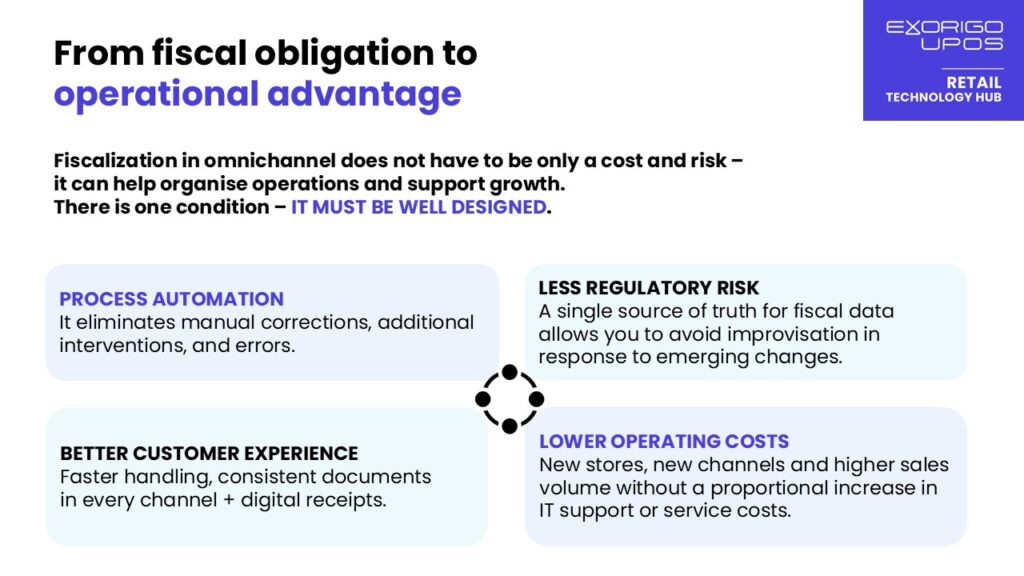
Simply put, the key benefits of an organised fiscalization model include:
- Elimination of manual corrections and interventions.
- Reduction in the number of errors.
- Faster and more consistent customer service.
- Consolidation of fiscal data into a single source of truth.
- Easier scaling of sales without a proportional rise in IT support and service costs.
This is a significant shift in perspective. Instead of treating fiscalization as a barrier to growth, it can be viewed as a component of operational architecture that boosts the efficiency of the entire omnichannel strategy.
SmartHub: One System for Online and Offline Sales
In an omnichannel environment, the biggest challenge is consistency. The more sales channels you have, the higher the risk of data fragmentation, process exceptions, and manual work.
This is where a single-system approach becomes crucial. SmartHub integrates the most important operational areas related to fiscalization and document workflow. It includes:
- SmartOrder: Fiscalization of online and offline sales.
- E-PARAGON+: Electronic receipt management.
- SmartKSeF: Compliance with e-invoicing regulations.
In practice, this model allows you to:
- Connect sales from different channels within one environment.
- Simplify document management.
- Streamline reporting to the seller’s internal systems.
- Ensure greater process predictability.
- Limit the number of local exceptions and organizational workarounds.
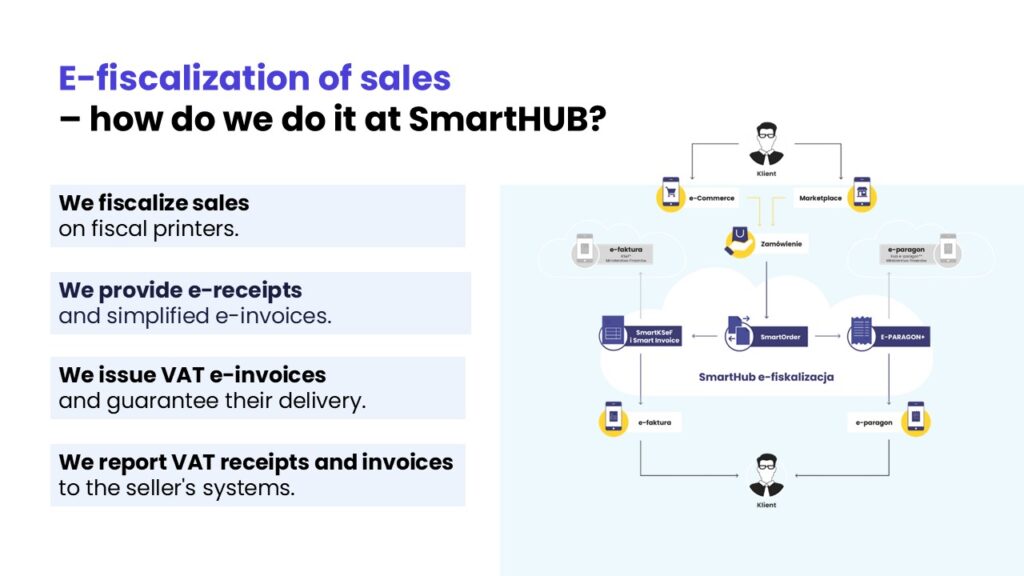
What Does E-Fiscalization Offer in Practice?
E-fiscalization goes beyond merely issuing a document. It is a comprehensive suite of actions that enhance customer convenience, service speed, and data quality.
Within the SmartHub model, you can:
- Fiscalize sales using fiscal printers.
- Deliver e-receipts.
- Handle simplified e-invoices.
- Issue VAT e-invoices and ensure their delivery.
- Report receipts and VAT invoices to the seller’s systems.
What are the Tangible Benefits?
Business Benefits:
- Up to 6-7 million PLN in annual savings by eliminating paper, logistics, and printer maintenance costs.
- Nearly 100% identifiable transactions within the app.
- Increased brand engagement and better conditions for personalized offers and cross-selling.
- Faster checkout at the point of sale.
- 337,500 labor hours recovered annually.
- 50% reduction in printing.
Environmental and Brand Image Benefits:
- Reduced paper consumption.
- Strengthened brand image as an environmentally responsible company.
- Reduction of 405 tons of non-recyclable paper annually.
- Reduction of emissions by 63.8 t CO2e per year.