
Electronic vs. Paper Labels – Comparison
 Blog
Blog
Share:
For many years, paper price labels were the standard in stores – requiring manual updates, which were time-consuming, error-prone, and generated vast amounts of waste. However, in recent years, they have given way to a more modern alternative: electronic price labels (ESLs, for short). It’s a digital technology solution that facilitates price management and also supports an eco-friendly approach to sales.
Electronic or traditional paper labels? Key differences
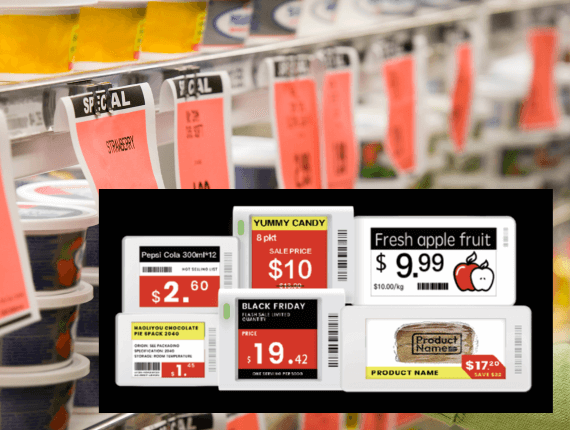
Electronic labels are digital displays mounted on store shelves that automatically update prices and product information. By connecting to a central price management system, such as Nettickit, for price label management, stores can respond quickly to price changes, promotions, or product availability.
Paper labels, on the other hand, are simply… Paper labels – a piece of paper that shows the price and name of the product.
However, when comparing these two significantly different labels, there are several important criteria to consider:
1. Cost and initial investment
- Paper price labels: low purchase costs, but higher labor costs associated with replacing and updating them.
- Electronic labels (ESL): higher initial cost of purchase and installation, but significant savings in the long term – thanks to automation.
2. Flexibility and speed of updates
- Paper: Any price change requires manual label replacement, which is time-consuming and error-prone.
- Electronic: The update is done remotely in seconds, allowing you to react immediately to promotions and market changes.
3. Ecology
- Paper: high paper and ink consumption, frequent printing of new labels.
- Electronic: reduction of paper waste and lower environmental impact.
4. Presentation of information
- Paper: limited space for information, lack of interactivity.
- ESL: Ability to present additional data such as product composition, allergy information, and QR codes.
What are the advantages and disadvantages of electronic and paper labels?
Paper labels
Advantages:
- Low purchase price.
- Simple operation in small shops.
- No technological requirements.
Cons:
- Common errors and the need for manual replacement.
- Higher labor costs with a large assortment.
- Inability to react quickly to price changes.
Electronic Labels (ESL)
Advantages and Benefits of ESL:
- Automatic price and information updates.
- Eco-friendly support and paper saving.
- Better presentation of information for customers.
- Possibility of integration with management systems.
Cons:
- Higher initial investment cost.
- Technological infrastructure required.
- The need to train employees in the use of the system.
The use of ESL and paper labels in practice
The choice between paper and electronic price labels depends on the type of store, the number of products, and your pricing strategy.
Retail stores with a large assortment definitely benefit from the use of ESL because:
- The time it takes to update prices is reduced.
- The risk of errors is minimized.
- Customers receive accurate and up-to-date information.
On the other hand, small stores with a limited inventory can still use traditional paper labels, especially if price changes are rare.
Paper labels and ESL – summary
| Criterion | Paper labels | Electronic Labels (ESL) |
| Initial cost | Low | High |
| Cost of the upgrade | High (working time) | Low (automation) |
| Speed of updates | Free (manual) | Instant (remote) |
| Ecology | Paper and ink consumption | Reducing paper waste |
| Possibilities and presentation of information | Limited | Advanced (interactive) |
| Risk of errors | High | Low |
| Scalability | Limited | High (ideal for large stores) |
| Additional Features | None (name/price only) | QR codes, graphics |